BIKKI NEWS : Respiratory System 100 GK Bits in Telugu and english for UPSC, TGPSC, APPSC, SSC, RRB, IBPS స్థాయి ప్రశ్నలు & సమాధానాలు – తెలుగు & English
Respiratory System 100 GK Bits in Telugu and english
శ్వాసక్రియ రకాలు & వివిధ జీవుల శ్వాసావయవాలు (Types of Respiration & Respiratory Organs in Animals)
- కణాలలో గ్లూకోజ్ ఆక్సీకరణం చెంది శక్తి (ATP) విడుదలయ్యే జీవరసాయన ప్రక్రియను ఏమంటారు? What is the biochemical process in which glucose is oxidized inside cells to release energy (ATP)? జ / Ans: కణ శ్వాసక్రియ (Cellular Respiration)
- ఆక్సిజన్ సమక్షంలో జరిగే వాయుసహిత శ్వాసక్రియలో (Aerobic Respiration) ఒక గ్లూకోజ్ అణువు నుండి నికరంగా ఎన్ని ATP అణువులు ఉత్పత్తి అవుతాయి? How many net ATP molecules are produced from one glucose molecule during aerobic respiration? జ / Ans: 36 నుండి 38 ATP అణువులు (36 to 38 ATP molecules)
- ఆక్సిజన్ లేకుండా జరిగే అవాయు శ్వాసక్రియలో (Anaerobic Respiration / Fermentation) ఒక గ్లూకోజ్ అణువు నుండి ఎన్ని ATP అణువులు ఏర్పడతాయి? How many ATP molecules are formed from one glucose molecule in anaerobic respiration? జ / Ans: 2 ATP అణువులు (2 ATP molecules)
- వాయుసహిత మరియు అవాయు శ్వాసక్రియలు రెండింటికీ ఉమ్మడిగా ఉండే మొదటి దశ ఏది మరియు అది కణంలో ఎక్కడ జరుగుతుంది? Which is the common first step in both aerobic and anaerobic respiration, and where does it occur in the cell? జ / Ans: గ్లైకాలసిస్ (Glycolysis – EMP పాత్వే) – కణద్రవ్యంలో (Cytoplasm) జరుగుతుంది
- కణ శ్వాసక్రియలోని క్రెబ్స్ వలయం (Krebs Cycle / Citric Acid Cycle) మరియు ఎలక్ట్రాన్ రవాణా వ్యవస్థ (ETS) ఎక్కడ జరుగుతాయి? Where do the Krebs cycle and Electron Transport System (ETS) occur during cellular respiration? జ / Ans: మైటోకాండ్రియా (Mitochondria – మాత్రిక మరియు క్రిస్టేలలో)
- తీవ్రమైన వ్యాయామం చేసినప్పుడు మానవ కండరాలలో ఆక్సిజన్ కొరత వల్ల ఏ ఆమ్లం ఏర్పడి కండరాల నొప్పికి (Muscle Cramps) కారణమవుతుంది? Which acid accumulates in human muscles due to oxygen deficiency during vigorous exercise, causing muscle cramps? జ / Ans: లాక్టిక్ ఆమ్లం (Lactic Acid)
- ఈస్ట్ (Yeast) వంటి శిలీంధ్రాలలో జరిగే అవాయు శ్వాసక్రియ (కిణ్వ ప్రక్రియ) అంత్య ఉత్పన్నాలు ఏవి? What are the end products of anaerobic respiration (fermentation) in yeast? జ / Ans: ఇథైల్ ఆల్కహాల్ (Ethanol), కార్బన్ డై ఆక్సైడ్ (CO_2) మరియు శక్తి (2 ATP)
- అమీబా, హైడ్రా, స్పంజికలు మరియు బద్దెపురుగులలో వాయు వినిమయం దేని ద్వారా జరుగుతుంది? How does gaseous exchange take place in Amoeba, Hydra, sponges, and flatworms? జ / Ans: శరీర ఉపరితలం నుండి సాధారణ వ్యాపనం ద్వారా (Simple diffusion through body surface)
- వానపాము (Earthworm) మరియు జలగలలో శ్వాసక్రియ దేని ద్వారా జరుగుతుంది? Through which organ does respiration occur in earthworms and leeches? జ / Ans: తడిగా ఉండే చర్మం ద్వారా – చర్మీయ శ్వాసక్రియ (Moist cuticle/skin – Cutaneous respiration)
- బొద్దింక మరియు ఇతర కీటకాలలో (Insects) శ్వాస అవయవాలు ఏవి? What are the respiratory organs in cockroaches and other insects? జ / Ans: వాయునాళ వ్యవస్థ మరియు శ్వాసరంధ్రాలు (Tracheal system and Spiracles)
- సాలెపురుగులు మరియు తేళ్లలో (Arachnids) ఉండే ప్రత్యేక శ్వాస అవయవాలు ఏవి? What are the specialized respiratory organs found in spiders and scorpions? జ / Ans: పుస్తకాకార ఊపిరితిత్తులు (Book Lungs)
- రాచపీత (Limulus / King Crab) లో ఉండే శ్వాస అవయవాలు ఏవి? What are the respiratory organs in Limulus (King Crab)? జ / Ans: పుస్తకాకార మొప్పలు (Book Gills)
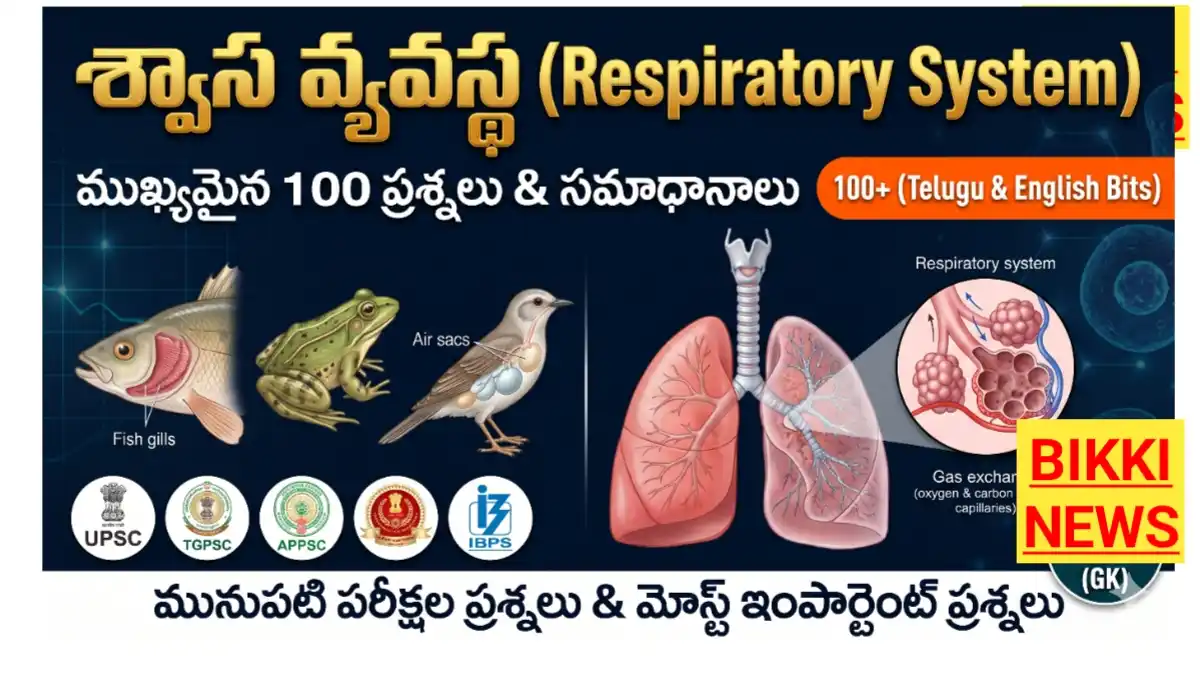
- చేపలు, రొయ్యలు, పీతలు మరియు కప్పల లార్వా (టాడ్పోల్) లలో శ్వాస అవయవాలు ఏవి? What are the respiratory organs in fishes, prawns, crabs, and tadpole larvae? జ / Ans: మొప్పలు (Gills – Branchial respiration)
- కప్ప (Frog) నీటిలో ఉన్నప్పుడు మరియు భూమిపై ఉన్నప్పుడు దేని ద్వారా శ్వాసిస్తుంది? How does a frog respire in water and on land? జ / Ans: నీటిలో చర్మం ద్వారా; భూమిపై చర్మం, ఆస్యకుహరం మరియు ఊపిరితిత్తుల ద్వారా (Skin, Buccal cavity, and Lungs)
- సరీసృపాలు, పక్షులు మరియు క్షీరదాలలో (తిమింగలాలు, డాల్ఫిన్లతో సహా) ప్రధాన శ్వాస అవయవాలు ఏవి? What are the primary respiratory organs in reptiles, birds, and mammals (including whales and dolphins)? జ / Ans: ఊపిరితిత్తులు (Lungs – Pulmonary respiration)
- పక్షులలో ఊపిరితిత్తులకు అనుబంధంగా ఉండి శ్వాస సామర్థ్యాన్ని, ఎగరడానికి తేలికదనాన్ని ఇచ్చే నిర్మాణాలు ఏవి? Which structures attached to the lungs in birds enhance respiratory efficiency and buoyancy during flight? జ / Ans: వాయు గోణులు (Air Sacs – 9 వాయు గోణులు ఉంటాయి)
- మొప్పల ద్వారా శ్వాసించే జలచర జీవులలో నీరు మరియు రక్తం వ్యతిరేక దిశల్లో ప్రవహించి గరిష్ట ఆక్సిజన్ను గ్రహించే విధానాన్ని ఏమంటారు? What is the mechanism in fish gills where water and blood flow in opposite directions to maximize oxygen uptake? జ / Ans: కౌంటర్ కరెంట్ వినిమయ వ్యవస్థ (Counter-current exchange mechanism)
- శ్వాస భాగఫలం (Respiratory Quotient – RQ) సూత్రం ఏమిటి? What is the formula for Respiratory Quotient (RQ)? జ / Ans: విడుదలైన CO_2 పరిమాణం / వినియోగించబడిన O_2 పరిమాణం (Volume\ of\ CO_2\ evolved / Volume\ of\ O_2\ consumed)
- కార్బోహైడ్రేట్లు, కొవ్వులు మరియు ప్రొటీన్ల శ్వాస భాగఫలం (RQ) విలువలు ఎంత? What are the Respiratory Quotient (RQ) values for carbohydrates, fats, and proteins? జ / Ans: కార్బోహైడ్రేట్లు: 1.0; కొవ్వులు: 0.7; ప్రొటీన్లు: 0.8 – 0.9
- మొలస్కా జీవులైన నత్తలు, ఆల్చిప్పలలో మొప్పల వంటి శ్వాస నిర్మాణాలను ఏమంటారు? What are the gill-like respiratory structures found in molluscs like snails and mussels called? జ / Ans: క్టీనిడియా (Ctenidia)
- గాలిలో ఆక్సిజన్ శాతం సుమారు 21% ఉండగా, నీటిలో కరిగి ఉండే ఆక్సిజన్ శాతం ఎంత? While air contains about 21% oxygen, what is the approximate percentage of dissolved oxygen in water? జ / Ans: 1% కంటే తక్కువ (సుమారు 0.5% – 0.9%; అందుకే జలచరాలు వేగంగా శ్వాసిస్తాయి)
- అస్థి చేపలలో (Bony Fishes) మొప్పలను కప్పి ఉంచే రక్షణ మూతను ఏమంటారు? What is the bony flap covering the gills in bony fishes called? జ / Ans: ఒపెర్కులం (Operculum)
- మృదులాస్థి చేపలలో (Cartilaginous Fishes – షార్క్స్) ఒపెర్కులం ఉంటుందా? Is an operculum present in cartilaginous fishes (Sharks)? జ / Ans: ఉండదు (మొప్ప చీలికలు నేరుగా బయటకు తెరుచుకుని ఉంటాయి / Absent)
- ఉభయచరాలు శీతాకాల సుప్తావస్థలో (Hibernation) ఉన్నప్పుడు ఏ శ్వాసక్రియపై ఆధారపడతాయి? Which mode of respiration do amphibians rely on during hibernation? జ / Ans: చర్మీయ శ్వాసక్రియ (Cutaneous respiration through moist skin)
- మానవునిలో ఆహార నాళం మరియు వాయు నాళం కలిసే ఉమ్మడి మార్గం ఏది? Which is the common passage for both food and air in humans? జ / Ans: గ్రసని (Pharynx)
Respiratory System 100 GK Bits in Telugu and english – మానవ శ్వాస వ్యవస్థ నిర్మాణం (Human Respiratory System Anatomy)
- మానవ శ్వాస మార్గం యొక్క సరైన వరుస క్రమం ఏమిటి? What is the correct sequence of the human respiratory tract? జ / Ans: నాసికా రంధ్రాలు \rightarrow నాసికా కుహరం \rightarrow గ్రసని \rightarrow స్వరపేటిక \rightarrow వాయునాళం \rightarrow శ్వాసనాళాలు \rightarrow శ్వాసనాళికలు \rightarrow వాయుగోణులు (Nostrils \rightarrow Nasal cavity \rightarrow Pharynx \rightarrow Larynx \rightarrow Trachea \rightarrow Bronchi \rightarrow Bronchioles \rightarrow Alveoli)
- ఆహారం మింగేటప్పుడు అది వాయునాళంలోకి పోకుండా స్వరపేటిక ద్వారమైన ‘గ్లాటిస్’ (Glottis) ను మూసి ఉంచే మృదులాస్థి మూత ఏది? Which cartilaginous flap covers the glottis during swallowing to prevent food from entering the windpipe? జ / Ans: ఉపజిహ్విక (Epiglottis)
- మానవునిలో ‘శబ్ద పేటిక’ (Voice Box / Sound Box) అని దేనిని పిలుస్తారు? Which organ is known as the ‘Voice Box’ in humans? జ / Ans: స్వరపేటిక (Larynx)
- పురుషులలో కంఠం వద్ద పొడుచుకువచ్చినట్లు కనిపించే థైరాయిడ్ మృదులాస్థి నిర్మాణాన్ని ఏమంటారు? What is the protruding thyroid cartilage structure visible in the throat of adult males called? జ / Ans: ఆడమ్స్ ఆపిల్ (Adam’s Apple)
- పక్షులలో ధ్వనిని ఉత్పత్తి చేసే ప్రత్యేక అవయవం పేరు ఏమిటి? What is the specialized sound-producing organ in birds called? జ / Ans: సిరింక్స్ (Syrinx)
- వాయునాళం (Trachea) గాలి లేనప్పుడు ముడుచుకుపోకుండా (Collapsing) కాపాడే నిర్మాణాలు ఏవి? Which structures prevent the trachea (windpipe) from collapsing when there is no air in it? జ / Ans: ‘C’ ఆకారపు మృదులాస్థి ఉంగరాలు (C-shaped hyaline cartilaginous rings – 16 నుండి 20 ఉంటాయి)
- వాయునాళం ఉరఃకుహరంలో ఎన్నవ ఉరః కశేరుకం (Thoracic Vertebra) వద్ద కుడి, ఎడమ శ్వాసనాళాలుగా (Primary Bronchi) చీలుతుంది? At the level of which thoracic vertebra does the trachea divide into right and left primary bronchi? జ / Ans: 5వ ఉరః కశేరుకం (5th Thoracic Vertebra – T5)
- ఊపిరితిత్తుల నిర్మాణాత్మక మరియు క్రియాత్మక ప్రమాణాలు (Structural & Functional Units) ఏవి? What are the structural and functional units of human lungs? జ / Ans: వాయుగోణులు (Alveoli – రెండు ఊపిరితిత్తులలో కలిపి సుమారు 30 నుండి 40 కోట్లు ఉంటాయి)
- వాయుగోణుల (Alveoli) గోడలు ఏ కణజాలంతో నిర్మితమై వాయు వినిమయానికి అనువుగా ఉంటాయి? Which tissue lines the walls of alveoli to facilitate rapid gaseous exchange? జ / Ans: అత్యంత పలుచని సరళ శల్కల ఉపకళా కణజాలం (Simple Squamous Epithelium)
- వాయుగోణుల ఉపరితల తన్యతను (Surface Tension) తగ్గించి అవి అతుక్కుపోకుండా కాపాడే రసాయనం ఏది? Which substance reduces surface tension in the alveoli and prevents them from collapsing? జ / Ans: పల్మనరీ సర్ఫాక్టెంట్ (Pulmonary Surfactant – లెసిథిన్ / డైపాల్మిటాయిల్ ఫాస్ఫాటిడైల్ కోలిన్; టైప్-II న్యూమోసైట్లు స్రవిస్తాయి)
- ఊపిరితిత్తులను కప్పి ఉంచే రెండు పొరల రక్షణ కవచాన్ని ఏమంటారు? What is the double-layered protective membrane covering the lungs called? జ / Ans: ప్లూరా (Pleura – వెలుపలి పారైటల్ ప్లూరా, లోపలి విసెరల్ ప్లూరా; మధ్యలో ప్లూరల్ ద్రవం ఉంటుంది)
- కుడి ఊపిరితిత్తి మరియు ఎడమ ఊపిరితిత్తిలో ఉండే తమ్మెల (Lobes) సంఖ్య ఎంత? How many lobes are present in the right lung and left lung respectively? జ / Ans: కుడి ఊపిరితిత్తి: 3 తమ్మెలు; ఎడమ ఊపిరితిత్తి: 2 తమ్మెలు (ఎడమ వైపున గుండె కోసం ‘కార్డియాక్ నాచ్’ ఉండటం వల్ల కొంచెం చిన్నదిగా ఉంటుంది)
- ఉరఃకుహరాన్ని (Thoracic Cavity) మరియు ఉదరకుహరాన్ని (Abdominal Cavity) వేరుచేసే గుమ్మటం ఆకారపు కండర పొర ఏది? Which dome-shaped muscular sheet separates the thoracic cavity from the abdominal cavity? జ / Ans: విభాజక పటలం (Diaphragm – ఇది క్షీరదాల ముఖ్య లక్షణం)
- మానవునిలో సాధారణ విశ్రాంతి స్థితిలో శ్వాస రేటు (Respiratory Rate) నిమిషానికి ఎంత ఉంటుంది? What is the normal resting respiratory rate per minute in an adult human? జ / Ans: నిమిషానికి 12 నుండి 16 సార్లు (12 to 16 breaths per minute)
- నవజాత శిశువులలో (Newborn babies) శ్వాస రేటు నిమిషానికి ఎంత ఉంటుంది? What is the respiratory rate per minute in newborn babies? జ / Ans: నిమిషానికి 30 నుండి 60 సార్లు (30 to 60 breaths per minute)
- శ్వాస తీసుకునేటప్పుడు (ఉచ్ఛ్వాసం / Inspiration) విభాజక పటలం ఏ ఆకారంలోకి మారుతుంది? What shape does the diaphragm assume during inhalation (inspiration)? జ / Ans: సంకోచించి సమతలంగా (Flat) మారుతుంది (ఫలితంగా ఉరఃకుహర పరిమాణం పెరుగుతుంది)
- నిశ్వాసం (Expiration) సమయంలో పక్కటెముకల మధ్య ఉండే ఏ కండరాలు సడలుతాయి? Which muscles between the ribs relax during normal expiration? జ / Ans: బాహ్య పర్సుకాంతర కండరాలు (External Intercostal Muscles)
- ఉచ్ఛ్వాస (Inhaled air) మరియు నిశ్వాస (Exhaled air) గాలిలో ఆక్సిజన్ మరియు కార్బన్ డై ఆక్సైడ్ శాతాలు ఎంత? What are the percentages of oxygen and carbon dioxide in inhaled and exhaled air? జ / Ans: ఉచ్ఛ్వాస గాలి: O_2 21%, CO_2 0.04%; నిశ్వాస గాలి: O_2 16.4%, CO_2 4.4% (నత్రజని 78% మారదు)
- శ్వాసమార్గంలోని శ్లేష్మ పొరపై ఉండే సూక్ష్మ వెంట్రుకల వంటి నిర్మాణాలు (Cilia) దుమ్ము కణాలను ఏ వైపుకు తోస్తాయి? In which direction do the cilia lining the respiratory tract push mucus and dust particles? జ / Ans: పై వైపుకు – గ్రసని/గొంతు వైపుకు (Upward toward the pharynx)
- వాయుమార్గంలో ‘నిర్జీవ ప్రదేశం’ (Anatomical Dead Space) అంటే ఏమిటి మరియు దాని పరిమాణం ఎంత? What is ‘Anatomical Dead Space’ in the respiratory tract and what is its volume? జ / Ans: వాయు వినిమయం జరగని నాసికా రంధ్రాల నుండి శ్వాసనాళికల వరకు గల భాగం – సుమారు 150 మి.లీ (150 mL)
- వాయుగోణులలో ఆక్సిజన్ పాక్షిక పీడనం (pO_2) మరియు కార్బన్ డై ఆక్సైడ్ పాక్షిక పీడనం (pCO_2) ఎంత ఉంటుంది? What are the partial pressures of oxygen (pO_2) and carbon dioxide (pCO_2) in the alveoli? జ / Ans: pO_2 = 104\ mmHg, pCO_2 = 40\ mmHg
- ఆమ్లజని సహిత రక్తంలో (Oxygenated Blood) pO_2 మరియు pCO_2 విలువలు ఎంత? What are the values of pO_2 and pCO_2 in oxygenated blood? జ / Ans: pO_2 = 95\ mmHg, pCO_2 = 40\ mmHg
- ఆమ్లజని రహిత రక్తంలో (Deoxygenated Blood) pO_2 మరియు pCO_2 విలువలు ఎంత? What are the values of pO_2 and pCO_2 in deoxygenated blood? జ / Ans: pO_2 = 40\ mmHg, pCO_2 = 45\ mmHg
- వాయుగోణులు మరియు రక్తకేశనాళికల మధ్య O_2, CO_2 ల మార్పిడి ఏ భౌతిక సూత్రం ఆధారంగా జరుగుతుంది? Based on which physical principle does the exchange of O_2 and CO_2 occur between alveoli and blood capillaries? జ / Ans: పాక్షిక పీడన వ్యత్యాసం ఆధారంగా జరిగే సాధారణ వ్యాపనం (Simple Diffusion based on partial pressure gradient)
- కార్బన్ డై ఆక్సైడ్ యొక్క ద్రావణీయత (Solubility) ఆక్సిజన్ కంటే దాదాపు ఎన్ని రెట్లు ఎక్కువగా ఉంటుంది? How many times higher is the solubility of carbon dioxide compared to oxygen? జ / Ans: 20 నుండి 25 రెట్లు ఎక్కువ (20 to 25 times higher)
- వాయు వినిమయ త్వచం (Respiratory Membrane) ఏ మూడు పొరలతో నిర్మితమై ఉంటుంది? Which three layers make up the respiratory diffusion membrane? జ / Ans: వాయుగోణుల శల్కల ఉపకళా పొర, రక్తకేశనాళికల ఎండోథీలియం, మరియు వాటి మధ్య గల ఆధార త్వచం (మొత్తం మందం 1 మి.మీ కంటే తక్కువ)
- ఊపిరితిత్తుల నుండి ఆమ్లజని సహిత రక్తాన్ని గుండె యొక్క ఎడమ కర్ణికకు తీసుకెళ్లే రక్తనాళాలు ఏవి? Which blood vessels carry oxygenated blood from the lungs to the left atrium of the heart? జ / Ans: పుపుస సిరలు (Pulmonary Veins)
- గుండె కుడి జఠరిక నుండి ఆమ్లజని రహిత రక్తాన్ని ఊపిరితిత్తులకు తీసుకెళ్లే రక్తనాళం ఏది? Which blood vessel carries deoxygenated blood from the right ventricle to the lungs? జ / Ans: పుపుస ధమని (Pulmonary Artery)
- గర్భస్థ శిశువులో (Fetus) శ్వాసక్రియ దేని ద్వారా జరుగుతుంది? How does respiration occur in a human fetus? జ / Ans: జరాయువు (Placenta) ద్వారా తల్లి రక్తం నుండి ఆక్సిజన్ గ్రహించబడుతుంది
- ప్రాణాయామం చేసేటప్పుడు శ్వాసను నియంత్రించడంలో ప్రధాన పాత్ర పోషించే కండరం ఏది? Which muscle plays the key role in controlled breathing during Pranayama? జ / Ans: విభాజక పటలం (Diaphragm)
Respiratory System 100 GK Bits in Telugu and english: రక్తంలో వాయువుల రవాణా & నియంత్రణ (Transport of Gases & Regulation)
- రక్తంలో ఆక్సిజన్ ఏ రెండు రూపాలలో రవాణా చేయబడుతుంది? In which two forms is oxygen transported in human blood? జ / Ans: 97% ఎర్ర రక్త కణాలలోని హిమోగ్లోబిన్ ద్వారా (ఆక్సీహిమోగ్లోబిన్గా); 3% ప్లాస్మాలో కరిగిన స్థితిలో
- ఒక హిమోగ్లోబిన్ అణువు గరిష్టంగా ఎన్ని ఆక్సిజన్ అణువులను బంధించి రవాణా చేయగలదు? How many oxygen molecules can a single hemoglobin molecule bind and transport at maximum? జ / Ans: 4 ఆక్సిజన్ అణువులు (Hb_4O_8 – 4 ఇనుప పరమాణువులతో బంధితమవుతాయి)
- ఆరోగ్యవంతమైన వ్యక్తిలో 100 మి.లీ రక్తంలో ఎంత హిమోగ్లోబిన్ ఉంటుంది మరియు అది ఎంత ఆక్సిజన్ను రవాణా చేస్తుంది? How much hemoglobin is present in 100 mL of blood in a healthy person, and how much oxygen does it carry? జ / Ans: 12–16 గ్రాముల హిమోగ్లోబిన్; 100 మి.లీ ఆక్సిజనేటెడ్ రక్తం సుమారు 20 మి.లీ O_2 ను రవాణా చేస్తుంది (1 గ్రాము Hb = 1.34 మి.లీ O_2)
- సాధారణ శారీరక పరిస్థితులలో ప్రతి 100 మి.లీ ఆమ్లజని సహిత రక్తం కణజాలాలకు ఎంత ఆక్సిజన్ను అందిస్తుంది? Every 100 mL of oxygenated blood delivers how much oxygen to the tissues under normal physiological conditions? జ / Ans: సుమారు 5 మి.లీ ఆక్సిజన్ (5 mL of O_2)
- ఆక్సీహిమోగ్లోబిన్ వియోజన వక్రరేఖ (Oxygen-Hemoglobin Dissociation Curve) ఏ ఆకారంలో ఉంటుంది? What is the shape of the Oxygen-Hemoglobin Dissociation Curve? జ / Ans: సిగ్మాయిడ్ ఆకారం (Sigmoid / S-shaped curve)
- కణజాలాలలో pCO_2 పెరగడం, H^+ అయాన్ల గాఢత పెరగడం (pH తగ్గడం) మరియు ఉష్ణోగ్రత పెరగడం వల్ల ఆక్సీహిమోగ్లోబిన్ త్వరగా విడిపోయి ఆక్సిజన్ను విడుదల చేసే ప్రభావాన్ని ఏమంటారు? What is the effect called where increased pCO_2, lower pH, and higher temperature promote the dissociation of oxyhemoglobin to release oxygen in tissues? జ / Ans: బోర్ ప్రభావం (Bohr Effect – గ్రాఫ్ కుడివైపుకు జరుగుతుంది)
- రక్తంలో కార్బన్ డై ఆక్సైడ్ (CO_2) ఏ మూడు రూపాలలో రవాణా చేయబడుతుంది? In which three forms is carbon dioxide (CO_2) transported in the blood? జ / Ans: 70% బైకార్బోనేట్ అయాన్లుగా (HCO_3^-); 20–25% కార్బామినో-హిమోగ్లోబిన్గా; 7% ప్లాస్మాలో కరిగిన స్థితిలో
- ఎర్ర రక్త కణాలలో (RBC) ఉండే ఏ ఎంజైమ్ CO_2 మరియు నీటిని అత్యంత వేగంగా కార్బోనిక్ ఆమ్లంగా (H_2CO_3) మారుస్తుంది? Which enzyme present in high concentration in RBCs rapidly converts CO_2 and water into carbonic acid? జ / Ans: కార్బోనిక్ అన్హైడ్రేస్ (Carbonic Anhydrase – అత్యంత వేగవంతమైన ఎంజైమ్లలో ఒకటి)
- రక్తంలో బైకార్బోనేట్ అయాన్లు (HCO_3^-) RBC నుండి ప్లాస్మాలోకి వచ్చినప్పుడు అయానిక సమతుల్యత కోసం క్లోరైడ్ అయాన్లు (Cl^-) RBC లోకి వెళ్లే ప్రక్రియను ఏమంటారు? What is the phenomenon called where chloride ions (Cl^-) move into RBCs from plasma as bicarbonate ions (HCO_3^-) diffuse out? జ / Ans: క్లోరైడ్ షిఫ్ట్ లేదా హాంబర్గర్ దృగ్విషయం (Chloride Shift / Hamburger’s Phenomenon)
- ఊపిరితిత్తుల వద్ద ఆక్సిజన్ హిమోగ్లోబిన్తో కలవడం వల్ల రక్తం నుండి CO_2 త్వరగా బయటకు విడుదలయ్యే ప్రక్రియను ఏమంటారు? What is the effect called where binding of oxygen to hemoglobin in the lungs promotes the release of carbon dioxide from blood? జ / Ans: హాల్డేన్ ప్రభావం (Haldane Effect)
- భ్రూణ దశలోని హిమోగ్లోబిన్ (Fetal Hemoglobin – HbF) కు ఆక్సిజన్ పట్ల ఉండే ఆకర్షణ సామర్థ్యం వయోజన హిమోగ్లోబిన్ (HbA) కంటే ఎలా ఉంటుంది? How does the oxygen affinity of fetal hemoglobin (HbF) compare to adult hemoglobin (HbA)? జ / Ans: ఎక్కువగా ఉంటుంది (Higher affinity – దీనివల్ల తల్లి రక్తం నుండి పిండానికి ఆక్సిజన్ సులభంగా బదిలీ అవుతుంది)
- కండర కణాలలో ఆక్సిజన్ను నిల్వ ఉంచే ఎరుపు రంగు వర్ణద్రవ్యం ఏది? Which red-colored pigment stores oxygen inside muscle fibers? జ / Ans: మయోగ్లోబిన్ (Myoglobin – ఇందులో ఒకే హీమ్ సమూహం ఉంటుంది, దీని వక్రరేఖ హైపర్బోలిక్ ఆకారంలో ఉంటుంది)
- క్యాబినెట్/గదిలో బొగ్గుల కుంపటి వేసుకుని తలుపులు మూసుకుని నిద్రించినప్పుడు ప్రాణాంతకమయ్యే విషవాయువు ఏది? Which toxic gas becomes fatal when sleeping in a closed room with burning charcoal? జ / Ans: కార్బన్ మోనాక్సైడ్ (Carbon Monoxide – CO)
- కార్బన్ మోనాక్సైడ్ (CO) హిమోగ్లోబిన్తో బంధం ఏర్పరచుకునే సామర్థ్యం ఆక్సిజన్ కంటే ఎన్ని రెట్లు ఎక్కువ? How many times higher is the affinity of carbon monoxide (CO) for hemoglobin compared to oxygen? జ / Ans: 200 నుండి 250 రెట్లు ఎక్కువ (కార్బాక్సీహిమోగ్లోబిన్ అనే స్థిర సమ్మేళనాన్ని ఏర్పరుస్తుంది)
- మెదడులో ప్రధాన శ్వాస నియంత్రణ కేంద్రం (Respiratory Rhythm Center) ఏ భాగంలో ఉంటుంది? In which part of the human brain is the primary Respiratory Rhythm Center located? జ / Ans: మజ్జాముఖం (Medulla Oblongata)
- శ్వాస లయ కేంద్రాన్ని నియంత్రించే ‘న్యూమోటాక్సిక్ కేంద్రం’ (Pneumotaxic Center) మెదడులోని ఏ భాగంలో ఉంటుంది? In which part of the brain is the ‘Pneumotaxic Center’ located to moderate the respiratory rhythm? జ / Ans: పాన్స్ వరోలీ (Pons Varolii)
- మానవులలో శ్వాసక్రియ వేగాన్ని ప్రధానంగా ఏ వాయువు గాఢత నియంత్రిస్తుంది? The concentration of which gas primarily regulates the rate of breathing in humans? జ / Ans: రక్తంలోని కార్బన్ డై ఆక్సైడ్ (CO_2) మరియు H^+ అయాన్ల గాఢత (ఆక్సిజన్ పాత్ర చాలా తక్కువ)
- ఊపిరితిత్తులు అతిగా సాగకుండా (Over-inflation) నిరోధించే నాడీ ప్రతిక్రియను ఏమంటారు? What is the reflex mechanism that prevents over-inflation of the lungs called? జ / Ans: హెరింగ్–బ్రూయర్ ప్రతిక్రియ (Hering-Breuer Reflex)
- ఎత్తైన పర్వత ప్రాంతాలకు (High Altitudes) వెళ్లినప్పుడు ఆక్సిజన్ తక్కువగా ఉండటం వల్ల ఎర్ర రక్త కణాల (RBC) సంఖ్య పెరిగే స్థితిని ఏమంటారు? What is the condition called where RBC count increases in response to low oxygen levels at high altitudes? జ / Ans: పాలీసైథీమియా (Polycythemia)
- ఆక్సిజన్ స్థాయి తగ్గినప్పుడు మూత్రపిండాలు ఏ హార్మోన్ను విడుదల చేసి ఎముక మజ్జలో RBC ఉత్పత్తిని పెంచుతాయి? Which hormone is released by the kidneys during hypoxia to stimulate RBC production in bone marrow? జ / Ans: ఎరిత్రోపాయిటిన్ (Erythropoietin)
- ఇనుప ధాతువు లోపం వల్ల హిమోగ్లోబిన్ తగ్గి ఆక్సిజన్ రవాణా మందగించే వ్యాధి ఏది? Which condition involves reduced oxygen-carrying capacity of blood due to iron/hemoglobin deficiency? జ / Ans: రక్తహీనత (Anemia)
- నైట్రేట్లు కలిగిన నీటిని తాగడం వల్ల హిమోగ్లోబిన్లోని Fe^{2+} అయాన్ Fe^{3+} గా మారి ఆక్సిజన్ను మోసుకెళ్లలేని వ్యాధి ఏది? Which disease occurs when nitrates convert Fe^{2+} to Fe^{3+} in hemoglobin, impairing oxygen transport in infants? జ / Ans: బ్లూ బేబీ సిండ్రోమ్ / మెథిమోగ్లోబినేమియా (Blue Baby Syndrome / Methemoglobinemia)
- లోతైన సముద్రంలో డైవింగ్ చేసే స్కూబా డైవర్లు (Scuba Divers) ఆక్సిజన్ సిలిండర్లలో ఆక్సిజన్తో పాటు ఏ జడవాయువును కలుపుతారు? Which inert gas is mixed with oxygen in cylinders used by deep-sea scuba divers? జ / Ans: హీలియం (Helium – నైట్రోజన్ రక్తంలో కరిగి ‘బెండ్స్’ / డీకంప్రెషన్ సిక్నెస్ కలిగించకుండా నివారించడానికి)
- సాధారణ శ్వాస పరిమాణాలు మరియు సామర్థ్యాలను కొలిచే వైద్య పరికరం ఏది? Which medical instrument is used to measure respiratory volumes and lung capacities? జ / Ans: స్పైరోమీటర్ (Spirometer)
- స్పైరోమీటర్ ద్వారా కొలవలేని ఊపిరితిత్తుల ఘనపరిమాణం ఏది? Which lung volume cannot be measured directly using a simple spirometer? జ / Ans: అవశేష ఘనపరిమాణం (Residual Volume – RV)
Respiratory System 100 GK Bits in Telugu and english: ఊపిరితిత్తుల ఘనపరిమాణాలు & శ్వాసకోశ వ్యాధులు (Lung Volumes & Respiratory Disorders)
- సాధారణ ఉచ్ఛ్వాస లేదా నిశ్వాసంలో ఊపిరితిత్తులలోకి తీసుకునే లేదా బయటకు వదిలే గాలి పరిమాణాన్ని (Tidal Volume – TV) ఏమంటారు మరియు దాని విలువ ఎంత? What is Tidal Volume (TV) and what is its normal value in an adult? జ / Ans: సాధారణ శ్వాస గాలి పరిమాణం – సుమారు 500 మి.లీ (500 mL per breath; నిమిషానికి 6,000 – 8,000 మి.లీ)
- బలవంతంగా నిశ్వాసం వదిలిన తర్వాత కూడా ఊపిరితిత్తులలో మిగిలి ఉండే గాలి పరిమాణాన్ని ఏమంటారు? What is the volume of air remaining in the lungs even after a forcible expiration called? జ / Ans: అవశేష ఘనపరిమాణం (Residual Volume – RV – సుమారు 1,100 నుండి 1,200 మి.లీ)
- బలవంతంగా గాలిని పీల్చిన తర్వాత, బలవంతంగా బయటకు వదలగలిగే గరిష్ట గాలి పరిమాణాన్ని ఏమంటారు? What is the maximum volume of air a person can breathe out after a forced inspiration called? జ / Ans: జీవ సామర్థ్యం (Vital Capacity – VC = TV + IRV + ERV \approx 4,000 – 4,600 mL)
- ఊపిరితిత్తుల మొత్తం సామర్థ్యం (Total Lung Capacity – TLC) ఎంత ఉంటుంది? What is the Total Lung Capacity (TLC) of human lungs? జ / Ans: సుమారు 5,800 నుండి 6,000 మి.లీ (Vital Capacity + Residual Volume)
- శ్వాసనాళాలు మరియు శ్వాసనాళికల వాపు (Inflammation) వల్ల శ్వాస తీసుకోవడంలో ఇబ్బంది, పిల్లికూతలు (Wheezing) వచ్చే వ్యాధి ఏది? Which condition causes difficulty in breathing with wheezing due to inflammation of bronchi and bronchioles? జ / Ans: ఆస్తమా (Asthma – ఉబ్బసం)
- అధిక ధూమపానం (Cigarette Smoking) వల్ల వాయుగోణుల గోడలు దెబ్బతిని శ్వాస ఉపరితల వైశాల్యం తగ్గిపోయే దీర్ఘకాలిక వ్యాధి ఏది? Which chronic disorder is caused mainly by cigarette smoking, damaging alveolar walls and reducing respiratory surface? జ / Ans: ఎంఫైసీమా (Emphysema)
- బొగ్గు గనులు, క్వారీలు, సిమెంట్ మరియు వస్త్ర పరిశ్రమలలో పనిచేసే కార్మికులకు దుమ్ము కణాల వల్ల వచ్చే వ్యాధులను ఏమంటారు? What are the lung diseases caused by long-term inhalation of dust particles in mining, stone-grinding, or textile industries called? జ / Ans: వృత్తిపరమైన శ్వాసకోశ వ్యాధులు (Occupational Respiratory Disorders – ఉదా: సిలికోసిస్, ఆస్బెస్టాసిస్, బ్లాక్ లంగ్ డిసీజ్ / న్యూమోకోనియోసిస్)
- పత్తి పరిశ్రమలలో పనిచేసే కార్మికులకు వచ్చే ‘బ్రౌన్ లంగ్ డిసీజ్’ (Brown Lung Disease) శాస్త్రీయ నామం ఏమిటి? What is the scientific name for ‘Brown Lung Disease’ affecting cotton textile workers? జ / Ans: బిస్సినోసిస్ (Byssinosis)
- క్షయ వ్యాధి (Tuberculosis – TB) ఏ బ్యాక్టీరియా వల్ల కలుగుతుంది మరియు దీని నివారణకు ఇచ్చే వ్యాక్సిన్ ఏది? Which bacterium causes Tuberculosis (TB), and what is the vaccine given to prevent it? జ / Ans: మైకోబ్యాక్టీరియం ట్యూబర్క్యులోసిస్ (Mycobacterium tuberculosis); వ్యాక్సిన్: BCG (Bacillus Calmette-Guérin)
- న్యుమోనియా (Pneumonia) వ్యాధి ఏ సూక్ష్మజీవుల వల్ల కలుగుతుంది మరియు ఇది ఊపిరితిత్తుల ఏ భాగాన్ని ప్రభావితం చేస్తుంది? Which pathogens cause Pneumonia, and which part of the lungs does it affect? జ / Ans: స్ట్రెప్టోకోకస్ న్యుమోనియే మరియు హీమోఫిలస్ ఇన్ఫ్లుఎంజా బ్యాక్టీరియా; వాయుగోణులలో (Alveoli) ద్రవం నిండిపోతుంది
- కణజాలాలకు తగినంత ఆక్సిజన్ అందకపోయే స్థితిని ఏమంటారు? What is the condition characterized by inadequate oxygen supply to body tissues called? జ / Ans: హైపోక్సియా (Hypoxia)
- తాత్కాలికంగా శ్వాస ఆగిపోవడాన్ని (Cessation of breathing) వైద్య పరిభాషలో ఏమంటారు? What is the temporary cessation of breathing called in medical terminology? జ / Ans: అప్నియా (Apnea – ఉదా: స్లీప్ అప్నియా)
- శ్వాస తీసుకోవడంలో తీవ్రమైన ఇబ్బంది లేదా ఊపిరి ఆడకపోవడాన్ని ఏమంటారు? What is the medical term for labored or difficult breathing (shortness of breath)? జ / Ans: డిస్ప్నియా (Dyspnea)
- కోవిడ్-19 (COVID-19) వ్యాధికి కారణమైన వైరస్ పేరు ఏమిటి? What is the name of the virus that causes COVID-19? జ / Ans: SARS-CoV-2 (Severe Acute Respiratory Syndrome Coronavirus 2)
- శరీరంలో ఆక్సిజన్ సంతృప్తత స్థాయిని (SpO_2) వేలికి అమర్చి కొలిచే పరికరం ఏది మరియు సాధారణ స్థాయి ఎంత? Which device clips onto a finger to measure blood oxygen saturation (SpO_2), and what is its normal range? జ / Ans: పల్స్ ఆక్సీమీటర్ (Pulse Oximeter); సాధారణ స్థాయి: 95% – 100%
- అతిగా శ్వాస తీసుకోవడం (Hyperventilation) వల్ల రక్తంలో CO_2 తగ్గి రక్త pH పెరిగే స్థితిని ఏమంటారు? What is the condition caused by hyperventilation that lowers blood CO_2 and raises blood pH? జ / Ans: రెస్పిరేటరీ ఆల్కలోసిస్ (Respiratory Alkalosis)
- మొదటి ప్రపంచ యుద్ధంలో ఊపిరితిత్తులను దెబ్బతీయడానికి రసాయన ఆయుధంగా ఉపయోగించిన విషవాయువు ఏది? Which toxic gas was used as a chemical weapon during World War I to damage lungs? జ / Ans: ఫాస్జీన్ (Phosgene – COCl_2) మరియు మస్టర్డ్ గ్యాస్
- పుట్టిన శిశువు యొక్క ఊపిరితిత్తులలో సర్ఫాక్టెంట్ లోపం వల్ల వచ్చే శ్వాస సమస్యను ఏమంటారు? What is the breathing disorder in premature newborns caused by a deficiency of pulmonary surfactant? జ / Ans: ఇన్ఫాంట్ రెస్పిరేటరీ డిస్ట్రెస్ సిండ్రోమ్ (IRDS / Hyaline Membrane Disease)
- మానవునిలో కుడి ఊపిరితిత్తిని మూడు తమ్మెలుగా విభజించే చీలికలు ఏవి? Which fissures divide the right human lung into three lobes? జ / Ans: క్షితిజ సమాంతర చీలిక మరియు ఏటవాలు చీలిక (Horizontal fissure and Oblique fissure)
- ప్రపంచ ఆస్తమా దినోత్సవం మరియు ప్రపంచ క్షయ (TB) నివారణ దినోత్సవం ఎప్పుడు జరుపుకుంటారు? When are World Asthma Day and World Tuberculosis (TB) Day observed? జ / Ans: ప్రపంచ క్షయ దినోత్సవం: మార్చి 24 (March 24); ప్రపంచ ఆస్తమా దినోత్సవం: మే నెల మొదటి మంగళవారం (First Tuesday of May)